


Ticks are becoming more active in most regions of Russia. Moreover, this year it happened a month earlier than usual due to the snowy winter. Cases of bites were recorded in at least 64 regions, including the capital region. “Moscow Evening” learned how to protect your pet from a tick attack from veterinarian Mikhail Shelyakov of the highest category.
According to him, the most dangerous periods in which ticks were previously active were spring and autumn. But now, taking into account climate change and heat spots in the city (for example, heating pipes), pets need tick treatment in almost all seasons – from the first temperatures above zero to complete frost.
Four ways to protect
There are four main ways to protect your pets from ticks:
- Collars – require constant wear;
- Sprays – last up to four weeks (but may require periodic replenishment);
- Drops (on the withers) – effective for no more than a month;
- Tablets – last from one to three months.
– Meanwhile, collars are more suitable for dogs. But it is not recommended for cats because it is dangerous. “If we take a cat with us to the countryside, and it jumps from one apple tree to another, it can get stuck on a branch in its collar,” the vet explained.
However, the expert explained that tick collars are the least effective of all four methods – they offer poor protection. Sprays are slightly more effective. They are useful if your pet is in urgent need of treatment: for example, when you spontaneously decided to go with him to the forest or to the countryside.
One of the advantages of sprays is their immediate effect. But the main drawback is the unevenness of treatment: somewhere the spraying was not done sufficiently, somewhere the active substance was washed off by rain or dew, and this area may be unprotected, and a tick may attach to it, as the veterinarian indicated.
Drops on the withers against ticks take second place in effectiveness. It protects your pet well, but when applying it you have to take into account the frequency of treatment, as it does not last more than a month, and the type of fur you need to apply it to.
— The active ingredient is distributed in drops along the fatty layer, so it should be applied to dirty wool. “If you apply the drops to a freshly washed pet, their effectiveness will be very low,” the VM interviewer warned.
The most effective, according to the veterinarian, are anti-tick tablets. It is completely safe for pets and can be used even by pregnant, lactating, weak and sick animals.
“However, this method of protection is the most expensive of all existing methods. Its main drawback is the unreliability of drug delivery. For example, the dog was given a pill in the evening, and in the morning we went for a walk with her, he ate a lot of grass and vomited. The owner is left to guess whether the substance is absorbed within 12 hours or not,” explained Shelyakov. — In this case, in order not to give your pet a second dose of the drug, you can use a tick collar as additional protection. Although it is ineffective, it may have some partial effect in this case.
By the way, the veterinarian emphasized that the widespread belief that such tablets can “damage” the liver of a four-legged friend is a marketing ploy and conspiracies of competitors of these drugs.
important
Deworming is not necessary before treating your pet for ticks. The expert explained that these preventive measures are not related to each other and can be implemented in parallel or within the required time frame.
Why do both dogs and cats need treatment?
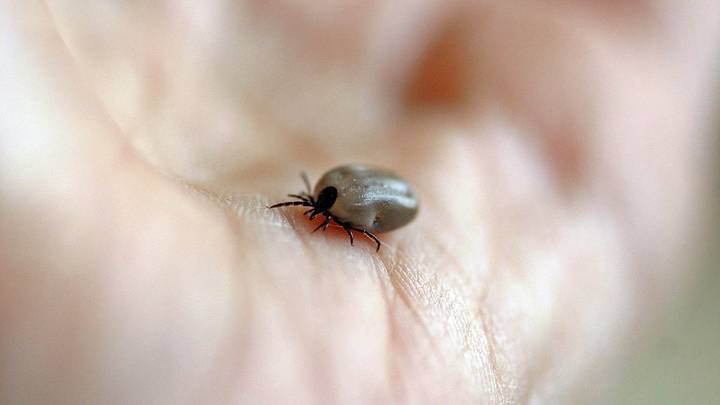
Ticks carry many diseases that are dangerous for dogs, but cats practically do not get sick from their bites, which is why many owners come to the wrong conclusion that cats do not need treatment. However, this is fundamentally wrong, and the vet confirmed:
– This is, of course, an incorrect conclusion, because the tick bite in itself causes discomfort. In addition, ticks can crawl through the fur for a very long time to find a place to attach, and blood saturation can continue for another day. The expert warned that it may happen that we take a cat to the countryside, and a tick climbs on it, and then, when the cat comes to sleep in our bed, these arthropods can crawl from the animal to the human.
Therefore, anti-tick treatment is necessary for both cats and dogs, both for their health and for the owner’s protection, almost all year round.
Do furry couch potatoes need treatment?
The vet warned that even if your pet never goes outside, the risk of picking up ticks still exists.
— The risks depend on where he lives and what kind of life his owner leads. If a person likes to walk in parks and forests, then theoretically he can bring the tick home with him, and it can attach to the animal. So in this case, tick treatment is still necessary. There are rare cases when a tick gets into the house even in winter, for example, on the floor in a bag of potatoes or on a Christmas tree. Shlyakov warned that some residential complexes have winter gardens on the ground floors, and ticks can also live on the plants there – in comfortable conditions and at temperatures above zero, they can remain active all year round.
The veterinarian concluded that the pet owner needs to take all these risk factors into account and, based on them, decide whether his pet needs protection from ticks.
Ixodid ticks can cause diseases of the nervous system that can paralyze a person. Veshernaya Moskva found out what else these ticks are dangerous for.