

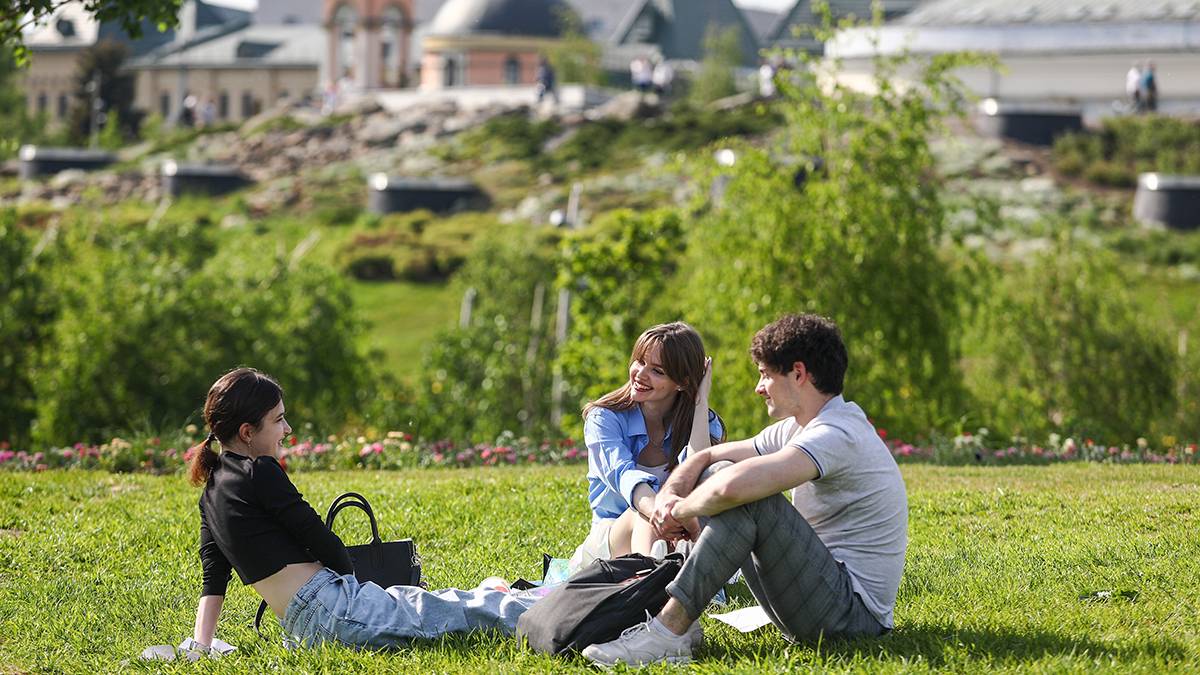
Many schoolchildren dream of spending the summer holidays as quietly as possible: sleeping, watching videos, scrolling through social networks and doing nothing. But proper rest does not mean inaction, but rather a change of activity, new experiences and an emotional reboot.
Natalia Sergeeva, a psychological educator at the City Psychological and Pedagogical Center of the Ministry of Education and Science in Moscow, told how to organize a productive, and most importantly, useful summer.
Walking aimlessly and hastily
Walking outdoors can be a great way to recharge your energy. And we are not talking about sports activities or a clearly planned route. Often, a leisurely walk across the garden, courtyard or bridge is sufficient, without serious or hasty conversations.
For teenagers, such moments gain added value if their parents are close to them. At this age, children need support, but they are not always ready for direct educational conversations. But spending time together informally — without pressure or instructions — helps strengthen the emotional connection. Just being close to you, breathing the same air, observing the world around you: it gives a feeling of being understood and safe.
The psychologist advises: Instead of the usual phrase “You need to walk more,” suggest the following:
– “Let’s walk together?”; – “Do you want to go cycling in the evening?”; “Maybe we should go watch the sunset by the river?”
Moreover, if a teenager is not in the mood to communicate, this is also normal. Sometimes silence and a quiet walk help you reset better than any conversation.
Movement without pressure
In the summer, physical activity is beneficial, but the main condition is that it makes you happy. It is easier for a teenager to engage in movement if it is not about “exercise for health,” but about fun: for example, playing basketball with friends, cycling, rock climbing, swimming, or snowboarding.
When an activity is chosen based on interests, it becomes part of a lifestyle, not just another responsibility. The main thing is to remove pressure and expectations of results from communication.
The phrase “You should exercise” always causes resistance. Suggestions without coercion will work better:
– “Maybe we can go to the pool this weekend?”; – “I heard that they are going to play volleyball in the park”; “You seem to like badminton? Let’s try again.”
In the summer, children and teenagers especially appreciate the opportunity to feel free. Therefore, it is important that exercise and physical activity bring joy and pleasure, and are not considered a duty.
New skills and a feeling of “I did it”
In the summer, it is useful to switch to activities where results are visible immediately. Bake a pie – give it to friends, take an interesting photo – the moment is captured as a memory, master three chords on the guitar – you can play a simple song. It doesn’t matter what you learn, the main thing is that the result is tangible and you can proudly say: “I did it!”
It is ideal for a teenager to be able to master something that he has always dreamed of, but did not have enough time for. At the same time, it is important for parents not to impose “useful circles”, but rather to preserve the child’s interest:
– “I’ve long wanted to learn to play the guitar. Maybe we could try?”; – “Let’s take pictures in the park?”; “I found an interesting class, we can go together.”
It is especially important for a teenager to realize that adults take his ideas seriously, even if they seem trivial.
Family time
Summer provides an opportunity to regain what there is not enough time for during the year – quiet family communication. And we’re not talking about long flights or expensive leisure time. Sometimes, the most beautiful memories are born from evenings at home with loved ones.
For a teenager, simple things like watching a movie together, playing a board game, going for a walk, talking over tea or cooking dinner can be much more important than adults think. We can offer:
– “I choose a movie – I order pizza”; – “Do you want us to sit on the balcony with tea in the evening?”; “Maybe we can play a board game we haven’t played in a long time?”
In such moments of calm a feeling of closeness and support arises.
Conversations in which the teenager is overheard
It is important for teens to understand that they are appreciated not only for their successes and achievements. Therefore, regular heart-to-heart conversations often become the main source of internal support.
At the same time, conversations should not seem like an attempt to give urgent advice. Sometimes it’s enough just to listen and ask a few clarifying questions:
– “What particularly surprised you today and why?”; – “Why do you like this music?”; “If you could do anything for an entire week, what would you choose?”
In such conversations, the main thing is not to enter into an argument or criticize the teenager’s answers. Even if his ideas seem strange or trivial to you, try to understand and support him.
Summer that inspires
Teens receive many cues from adults, including how to rest and take care of themselves. They notice whether parents know how to switch gears and find joy in simple moments.
Summer is the time to show your child: rest is not a race of activities. It’s much more important to slow down, be present more often, and have simple moments together – taking a walk, chatting about nothing, cooking dinner or looking at the stars.
It is important that after vacation, the teenager is left not only with a list of completed tasks, but also with a feeling of calm, comfort and comfort. After all, it is this vacation that will allow him to fully relax and start his studies with renewed vigor.