

On July 6, Russia celebrated Architect’s Day. Now in the capital, almost every building is built according to an individual project.
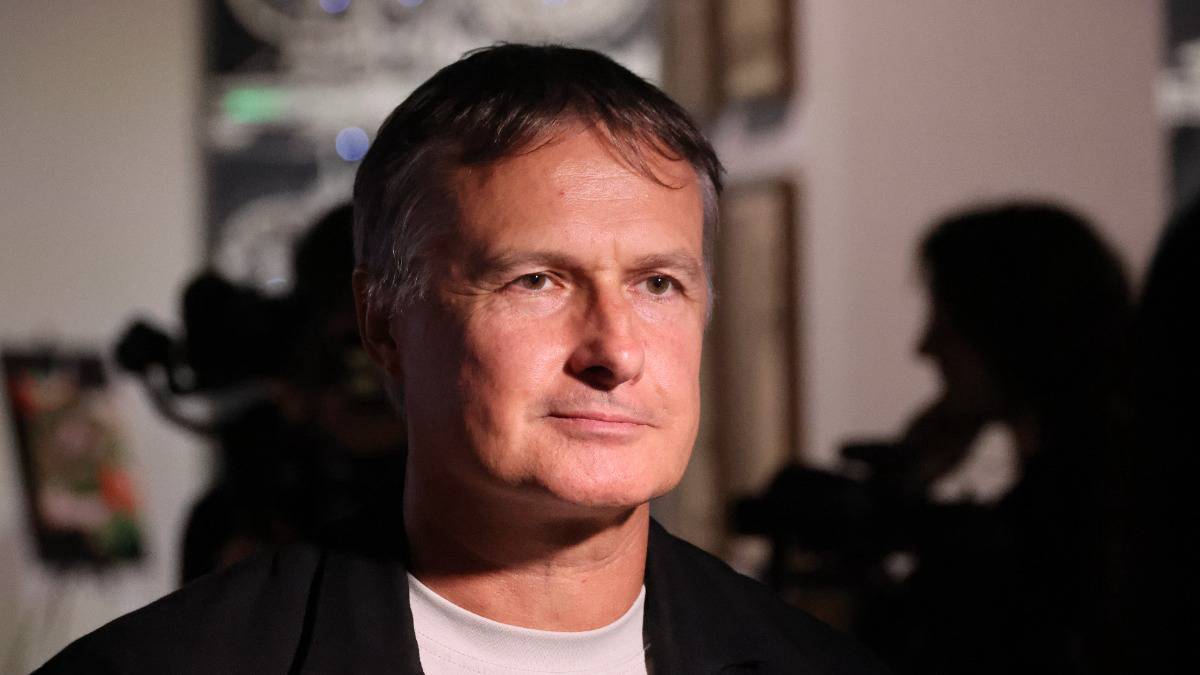
Anton Naducci, member of the Moscow Union of Architects, Professor of the International Academy of Architecture, author of the project for the construction of the National Center “Russia”, told “Moscow Evening” what principles architects follow and what tasks modern architects face.
From year to year, Moscow occupies a leading position in terms of the pace and volume of construction among Russian cities. Today’s new objects are carefully and wisely integrated into the historical appearance of the city. Each of them has its own distinctive “face”.
Anton Gennadievich, what trends in the development of modern architecture in Moscow have you noticed?
— In recent years, the metropolitan authorities have paid great attention to the architectural quality of objects. If earlier Moscow was more interested in shaping the principles and methods of urban planning, development of public urban spaces, and social projects, now the city pays great attention to architecture itself, and this, in my opinion, is a completely correct story, because architecture shapes the images of cities and the identity of certain areas. We, as architects, are certainly convinced that without close attention to architecture, it is impossible to create a complete and high-quality urban environment.
We see that Moscow now pays great attention to visual diversity, the formation of a new silhouette of the city, specific recognizable areas, so that all buildings are individual and different from each other, while at the same time carrying an artistic architectural quality, a kind of idea. This is of course very cool!
Although this complicates the work of architects, developers and everyone involved in the process, I am sure that the end result will be a very interesting result.
Is there any prevailing style of building construction in Moscow?
– It may be too early to describe the current phenomenon in a specific way. The city does not provide any specific recommendations for architects to work in one style or another. But the architecture must be unique and innovative. The development should have visual diversity and silhouette and be recognizable. The city now clearly understands what it ultimately wants to achieve, and it is at this moment that the dialogue takes shape and the architectural process develops.
How are modernity and history combined today? What do you take into account when developing your projects for Moscow?
— Of course, it is necessary to preserve the size of the historical part of the city, the morphology and development models that actually developed in a particular area. This is the formation of the street frontage and certain height restrictions. The city actually follows these principles already. Houses built in the center and houses built outside the historic areas have completely different approaches. The beauty of Moscow is that it is a city with a historically high level of diversity. You can go to the center for a walk and enjoy the scale of the historical part of the city. There are also high-rise complexes, completely different quality and environmental level. The resident can choose where to spend time or where to live. The city is a space of diversity, and Moscow in this sense follows precisely this strategy.
What do you think of the social infrastructure that is currently being built and rebuilt? The new facilities in the hinterland are distinguished by their original design, and in the historical part everything is placed on one level. Does this somehow affect the look and ambiance of the city?
– I cannot say that everyone leads to one standard. We ourselves are now involved in several city projects to build pilot schools in the Central Administrative District. To a large extent, schools in the city center are located in rather old buildings that were built during the Soviet era and no longer meet the standards and requirements for creating a high-quality educational environment.
In general, Moscow pays great attention to the quality of social facilities. Our company has been designing social facilities for about 20 years. But there was never such interest in such things as now. Now this is the city policy, the requirements for the construction of social facilities are very high, and even for us, professionals who have worked in this field for a long time, it is not always easy to satisfy them. But the result that I hope will appear in the near future will be amazing.
Architecturally, will it be something modern? How will the new school buildings fit into their surroundings?
– I believe that architecture should embody its era, and modern houses should be built. Another thing is that all the sites are very different, some are located in historical sites, others are in a somewhat mixed environment. There will be different projects, but of course, authors, including us, try to maintain the scale of the environment around us, in order to fit into it and respond correctly and beautifully to the surrounding context. But in any case, these will be modern facilities.
One of your most famous projects is the new building of the Russian National Center. How do they fit into the DC look?
The National Center “Russia” is being built in Moscow. This is a new area of the city, which, by the way, will continue to develop. In this sense, we have conceptualized our topic in a way that emphasizes its importance. We wanted to stand out as much as possible among the surrounding skyscrapers. First, they abandoned vertical dominions and divisions and created a natural, plastic form in contrast to skyscrapers.
One of the key and successful decisions in my opinion for our project was that we did not just build a building. We tried, first of all, to create a new urban public space, a square that opens onto the embankment, the Moscow city and the park. It will be a space under a canopy, with an amphitheater, where public events can be held outdoors, and where people can come and sit while walking in the park. We expect that the National Center will become a new cultural symbol and identification card not only of Moscow, but of the entire country.
file
Anton Gennadievich Nadtucci was born into a family of architects. In 1994 he graduated from the Moscow Architectural Institute. Since the same year he has been managing the architectural studio ATRIUM. Member of the Moscow Union of Architects, Professor of the International Academy of Architecture. She teaches at the Moscow Marsh School of Architecture and is the curator of the educational program “Designing the School of the Future”.
By the way
Voting has opened for the “Project of the Year” on the “Active Citizen” website as part of the “Best Implemented Project in the Construction Field” competition. D.C. residents will have to choose the winner from more than 35 candidates. This year, Muscovites will be able to choose the best things in 13 categories. Voting continues until July 29.