

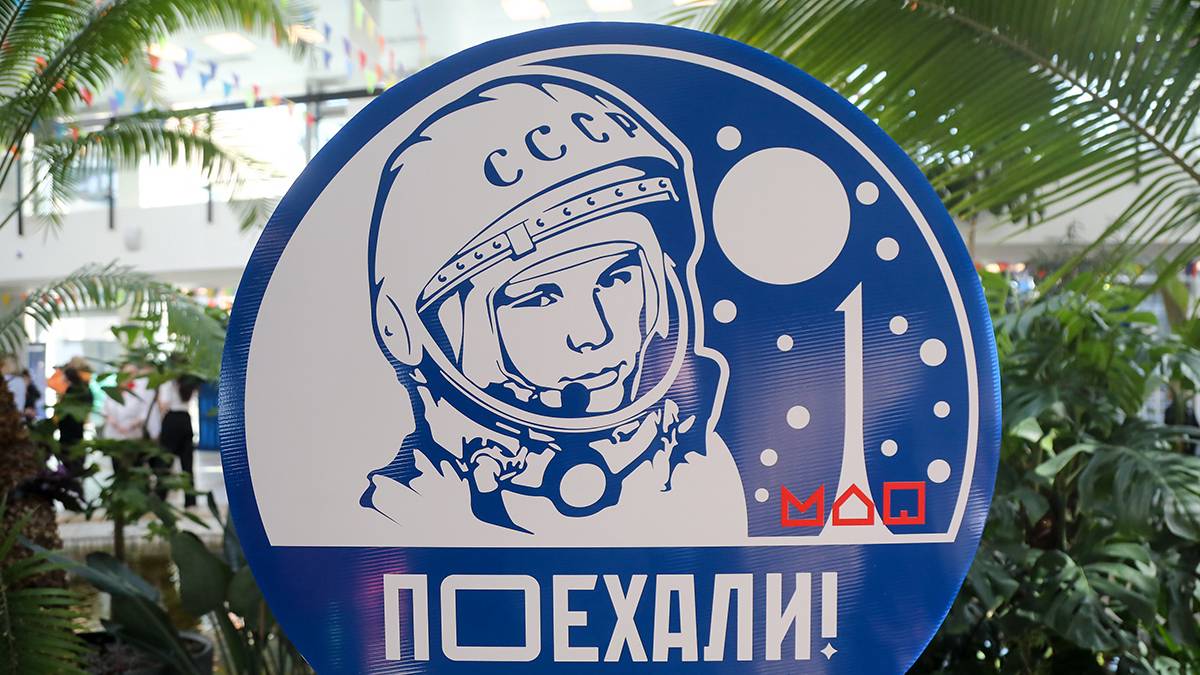
In honor of the anniversary of the first manned flight into space, the Izvestia Research Center presented a new special project “I see the Earth!” It became available to users on April 8 and is dedicated to one of the key events in world history.
The interactive project will take the audience back to the 1960s, a period of scientific breakthroughs, large-scale achievements and faith in the future. The visual design is inspired by newspapers, magazines and historical records of the period, as well as the aesthetics of posters and memorabilia art that shaped the image of the heroic astronaut and the symbolism of scientific progress.
The project not only reveals details of the historical journey, but also its impact on society. After this event, thousands of young people became interested in science and technology: schoolchildren enrolled in modeling and rocketry science clubs and, inspired by the example of the space explorer, sought to make their contribution to the development of science.
Particular attention in the project is paid to interactive forms. Users will be able to build a unique aircraft in Build a Rocket, experience satellite launches by calculating their path to reach orbit, and learn little-known facts about space using interactive flashcards.
The special project combines educational content and game mechanics, allowing you to delve deeper into the topic of space exploration.
April 12, 1961 has become one of the most important dates in human history. On this day, the Vostok-1 spacecraft, with Yuri Gagarin on board, entered Earth’s orbit for the first time, overcoming its gravity. Aviation has become a symbol of the possibilities of science and the power of the human desire for discovery. This event caused a wave of public jubilation both in the Soviet Union and beyond its borders, and Gagarin himself became a hero soon and understood by millions of people.
A special project of the Izvestia International Research Center “I see the Earth!” This event aims not only to remind us of the importance of this historic achievement, but also to inspire a new generation to study science, technology and space.