

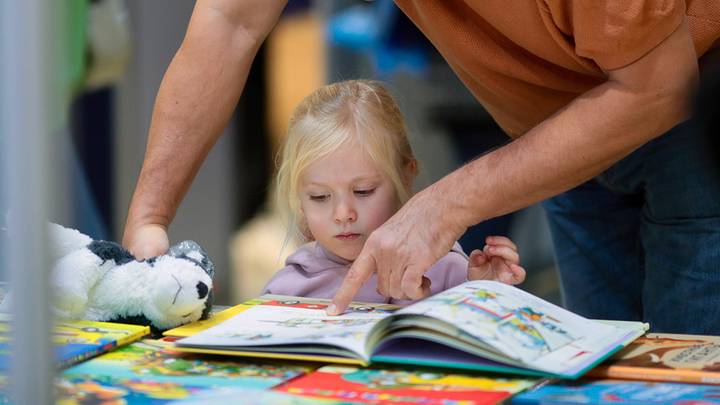
The contribution of children’s literature to child education can be evaluated as one of the fundamental ones. Parents, who read fairy tales, from an early age implant the concepts of kindness and empathy in the minds of their children and develop their imagination.
According to the Russian Writers’ Union, nearly 80 percent of families surveyed begin reading to children under two years of age. This shows an understanding of the importance of early introduction to literature, and is consistent with recent recommendations of educators and psychologists who emphasize the importance of reading in early childhood in brain development, expanding vocabulary and forming an emotional bond between parent and child. For older children, books become the foundation for spiritual and moral development, the core values of which are patriotism, family, justice and compassion.
Judging by the circulation, the most published children’s author in our country in recent years is Korney Chukovsky. Based on the number of copies sold in 2025, the most popular children’s book was “The Wizard of the Emerald City” by Alexander Volkoff. According to the statistics of the distribution of books in the Russian State Children’s Library, domestic contemporary authors are the most popular.
Children mostly read Russian classics – Pushkin, Bazhov, Chukovsky, Marshak, Mikhalkov, Barto. Preschoolers begin to read contemporary authors: domestic and foreign. Primary and secondary school students often read works included in the curriculum and extracurricular reading lists. High school students, as a rule, go beyond this framework; Their reading range is expanding, including due to free access to digital media.
RGDL regularly holds meetings between writers and readers, arranges presentations of their books, and invites them to book festivals. In particular, we are talking about the Children’s Book Week, the Moscow International Children’s Book Fair, the Book Festival on Red Square, the Kitovras Festival in Vladimir and a number of other major events related to children’s literature.
In 2020, the Russian State Children’s Library, with the support of the Russian Ministry of Culture, established the “Big Fairy Tale” award named after Eduard Uspensky. Its goal is to encourage contemporary children’s writers who create works of popular fiction and science that foster a love of literature and encourage children to read.
The opinion of the columnists may not coincide with the view of the editors