

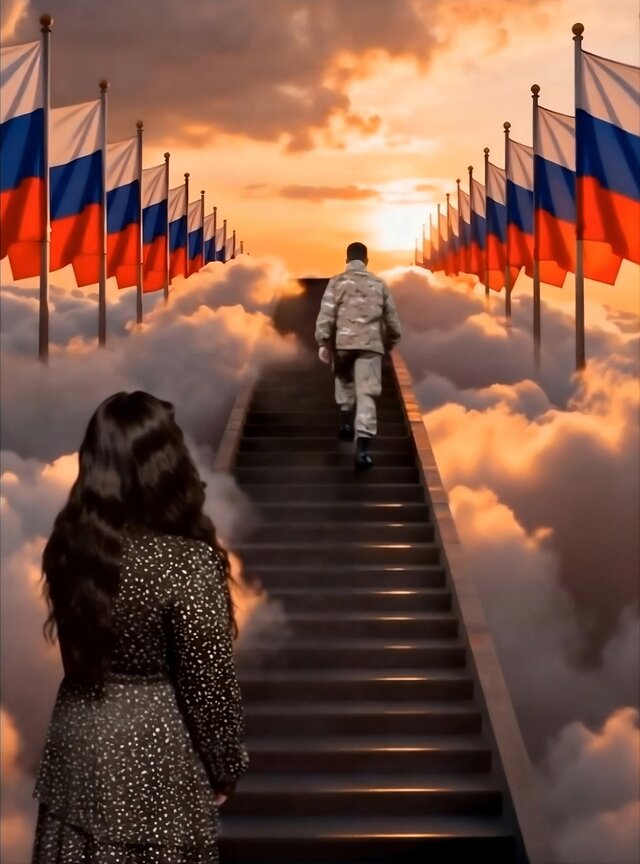
A new digital mourning practice is gaining popularity in Russia: widows and relatives of men killed in war are asking to have their photos “resurrected” using artificial intelligence. From old photos, wedding frames or selfies, neural networks create short videos in which the deceased moves, smiles and sometimes speaks with pre-written words. For some it is a way to preserve memory, and for others it is an attempt to deal with loss.
Demand increased supply – and the entire industry grew. Many so-called “neuro-creators” have appeared, offering to “return a loved one for at least a minute,” “make a last plea to a spouse,” or “revive the image of a hero.” The cost of orders ranges from several hundred to several thousand rubles, depending on the complexity of the installation, quality of the source and length of the video. About this phenomenon in detail He writes “BBC Russian Service”.
The scheme is usually simple. The client sends a picture to her husband, sometimes several pictures, and a voice message. The performer uploads the material to popular generative services, and then manually improves the result: removing artifacts, adding music, titles, military symbols, or appeal text.
Sometimes the video is shot almost like a documentary – with a slight movement of the head and a smile. Sometimes religious or pseudo-religious motives or even fantastical elements are added: the deceased man thanks his wife, gives parting words to the children, promises “to always be there” – and then ascends the stairs to heaven and becomes an angel.
The BBC profiles several representatives of this new craft, people who are building their businesses on the digital “resurrection” of the dead. among them – Katja Jan (Ekaterina Kirpichnikova). She is 21 years old. Even before the war, she earned money by producing content for social networks, and also participated in a dedicated campaign against Alexei Navalny. Her husband, also an “information businessman”, went to the front and disappeared without a trace. Katya Jeanne is left with a one-year-old baby in her arms, and the AI content she produces is mainly based on the image of a devoted wife waiting for her husband from the war.
Back in 2023, the project debuted “Farewell video” – Consists of AI videos created from photos, videos and voice messages of the deceased person. The idea is to use it to complete the “unsaid goodbye.” As the project creators told the BBC, the clients most often are the families of military personnel who died in Ukraine. The minimum price for the service is 1,300 rubles, the maximum is 10 thousand rubles.
Another “nervous creator,” known as Aliana, wrote that she began making “farewell videos” after her brother died in the war. At first she did it for free – now she earns 55 thousand rubles a day. Another, Ulyana Lebed, told the BBC that she processes between 40 and 50 images a day.
Some customers come back to watch new videos – on the anniversary of the death or on the deceased’s birthday.
“Neurocreatives” are typically women, many of whom claim to have similar experiences to their clients, and who also have a husband, brother, or other loved one who is at war, missing in action, wounded, or killed in war.
In the wake of the popularity of AI-driven videos and “topics,” social network entrepreneurs are making money not only by “activating” photos, but also by teaching others how to work with AI and selling products to independently generate desired content.
The emergence of this industry was made possible by a significant reduction in cost and simplification of the necessary technical solutions – generative artificial intelligence services and video editing software. In addition, experts interviewed by the BBC pointed out that this private industry compensates for the lack of support for victims’ relatives: the state pays them large sums of money, but neglects psychological assistance and social adaptation.