

The quality of the urban environment is one of the main indicators by which modern megacities are evaluated. It includes many standards that affect all aspects of citizens’ lives. “Moscow Evening” found out what vector of development of the urban environment the capital has chosen, what has been accomplished in recent years and what still needs to be done. And also why tourists who once visited Moscow want to visit the city again.
By Decree of the President of Russia dated May 7, 2024, the country’s national development goals were approved for the period up to 2030 and for the future up to 2036. One of the national goals is defined as “a comfortable and safe living environment.” The strategic goal is formulated as follows: “Improve the quality of the living environment in supportive settlements by 30 percent by 2030 and by 60 percent by 2036.”
Speaking at a roundtable at the Moscow City Duma dedicated to the development of the urban environment, Deputy Head of Moscow’s Metropolitan Reforms Department, Alexander Aydakin, noted that Moscow has achieved these goals in practice, taking into account the city’s level of livability.
Svetlana Razvorotneva, Deputy Chairman of the State Duma Committee on Construction, Housing and Communal Services, agreed with this thesis.
— Moscow is a recognized leader in the development of urban ecology. Delegations from different regions come to us, and if earlier they asked to be taken to the Bolshoi Theater or to some museum, now they ask to show improvement facilities, the deputy noted.
Vechernyaya Moscow tried to discover the “formula” for creating a comfortable urban environment.
Anthropocentrism
The issue of gentrification was comprehensively addressed in 2015, when the city adopted the “My Street” program. Since then, more than 2,100 streets in Moscow have been improved, and another 527 streets will be improved this year. But that’s only part of the job. Alexander Aydakin points out that the formula of a comfortable city does not derive from a specific subject, but from the person and his way of life.
— This is a certain vector, the life cycle of a person: apartment, hallway, house, yard, way to the metro station or other public transport, workplace, place of rest, and much more. “It is this tendency to understand human needs that determines the pace of development in each region,” says Alexander Aydakin.
Following this vector, we will look at the main elements of the urban environment and how and to what extent they have changed. There are 24.3 thousand courtyards in Moscow, and since 2011, landscaping has been carried out in all of them. In 2025, 2,344 patios were repaired, with plans to repair a further 2,091 patios this year.
If 15 years ago there were 130 official city parks, today their number has increased to 1190. Of course, we are not only talking about huge parks, but also about squares and public spaces, which are no less important for Muscovites, and often even more important.
The city is implementing large-scale programs to rebuild schools and clinics, but no less attention is paid to improving the territory of social institutions.
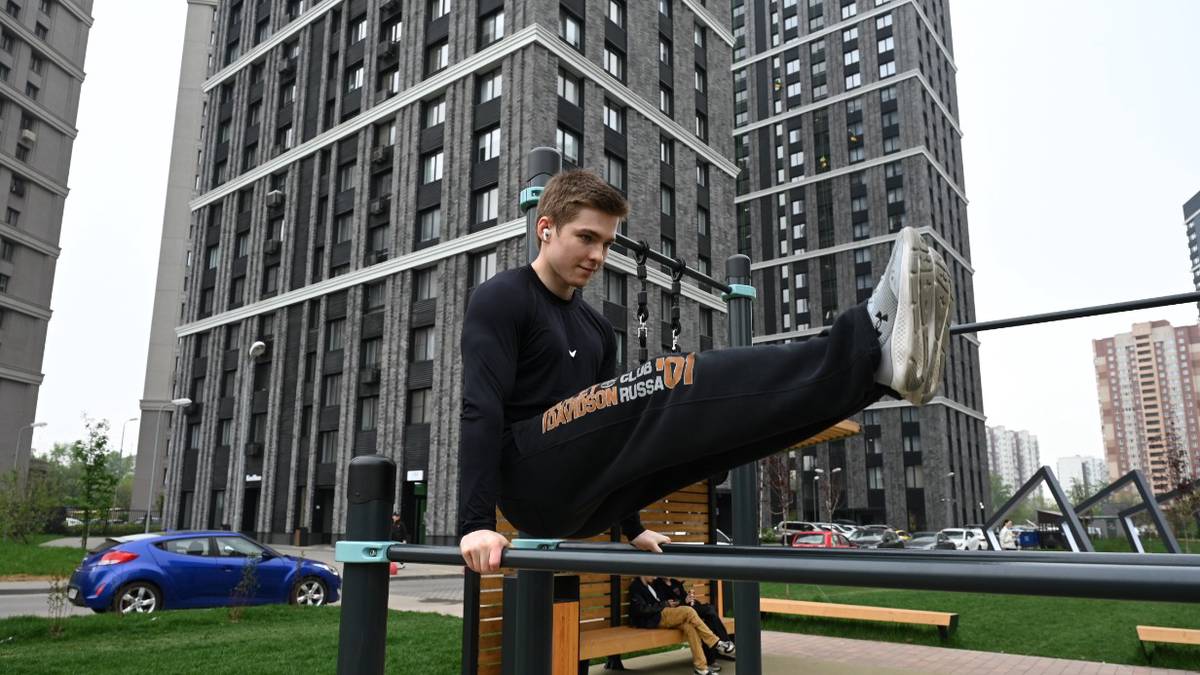
Sports infrastructure – at least horizontal bars and parallel bars – is available in every arena today. There is an ice rink in any city building. In accordance with the decision of the Mayor of Moscow, these funds will gradually turn into all-season sports areas: in winter – hockey, figure skating and bobsledding, in summer – football, volleyball, basketball and other sports. 11 pilot sites have already been implemented.
As part of the comprehensive street improvement programme, 677 streets were renovated in various areas of the capital in 2025 alone. Complex landscaping works include the full range of road works, including upgrading sidewalks and sewerage networks, installing lighting poles, pavilions, organizing parking lots and pedestrian crossings, installing road signs and many other works. The goal is to make the street comfortable and safe for pedestrians and motorists.
Garden City
Almost half of Moscow’s area is occupied by green spaces – these are large parks, such as Izmailovsky or Sokolniki, as well as small parks and squares. Someone will say: “If you want to go to nature, get out of the city.” However, according to recent estimates, the contribution of the environment to the quality of life of city dwellers reaches 20 percent, and in large cities this figure is even higher.
— Another important point is climate change. We do a lot of work to evaluate climate factors. At its peak, we see temperatures about six degrees higher than the normal climate. “This means that many processes are changing, and green spaces, parks and green streets are the main factor that helps to cope with these consequences,” says Yulia Orozhaeva, Head of the Department of Natural Resources and Environmental Protection in Moscow.
The impact of green spaces on the quality of life in the city was calculated. So, for example, one tree collects up to 30 kilograms of dust per year. Green areas are up to six degrees cooler in summer. In principle, regular walking in parks and a high proportion of green spaces in the city reduces the risk of respiratory and cardiovascular diseases.
The city is gradually mastering new forms of landscape. For example, rain gardens. These are green areas that “absorb” rainwater. For example, such a garden can be placed where water traditionally accumulates. A rain garden prevents flooding and filters water.
Roads along the river
In recent years, more than 100 km of Moscow River embankments have been diverted in the capital, six of them in 2025 alone: Danilovskaya, Derbenevskaya, Nagatinskaya, Novodanilovskaya, Paveletskaya and Shleuzovaya.
“They now represent a single pedestrian route along the Moscow River with a length of more than 11 kilometers. The improvement solved several problems at once and focused on social, transport and environmental functions,” Roman Kuliyev, deputy head of the Moscow Department of Housing and Communal Services, noted.
Plans for 2026 include four more dams: Prechistenskaya, Frunzenskaya, Novodevichya and Rostovskaya.
Improving these embankments will connect Luzhniki to Gorky Park and Novodevichy Ponds. The length of the new track will be 5.5 km. Improving dams also fits into the national “Infrastructure for Life” project. Some of them are being rebuilt, others are created by investors as part of large development projects. The dam is a recreational space and new routes for transportation, pedestrians and cyclists. By 2030, the capital plans to renew about thirty more dams.
Convenient navigation
We first talked about the comfortable environment equation that depends on the residents’ daily ways. The city invests significant resources in creating convenient roads, convenient streets, public places and developing attractions. To make it easier to find these points, the capital’s urban navigation system is being developed.
Since 2014, 108 thousand household signs and 16 thousand city signs have been installed in Moscow. Anyone whose phone with a navigator crashed at the most inopportune moment has witnessed the practical effect of implementing this project. Today in Moscow you can find the right address, the right object, simply by following the signs.
However, the city went further: a new direction appeared – national navigation. In 2020, on the occasion of the 75th anniversary of Victory in the Great Patriotic War, banners with QR codes appeared on the houses where the Marshal of Victory lived. By surveying it, it was possible to find out the biography of the military leader and his main merits. Muscovites appreciated and supported the initiative by voting “Active Citizen”. In 2026, more than 6.5 thousand such banners will be installed in the city, which will tell about the life of not only the guards, but also other Muscovites who made a significant contribution to the development of the city and the country, for example, the Polar Heroes.
Economic impact
Finally, about money. Creating a comfortable urban environment is of course a cost-effective project that brings real and tangible income to the city. Of course, the average person doesn’t see the direct economic impact — the updated bridge doesn’t pay taxes, and money doesn’t grow on the trees planted along the road.
But if we look deeper, we almost immediately see people involved in landscaping. They all receive salaries, which means they pay taxes. How do contractors, whose numbers are increasing, pay them?
The value of properties located near landscaped areas is increasing. A beautiful, well-lit, wide street is sure to attract “ground floor businesses” and the clients of these businesses.
Tourism contributes significantly to the budget. The number of people who visited Moscow, were inspired by it and wanted to return there is steadily increasing.
According to Deputy Chairman of the Moscow Tourism Committee Bulat Nurmukhanov, 58 percent of travelers who visited the capital in 2025 visited it in 2024. The rate of return of tourist flow for 2025 has reached its maximum value in the past five years.
By the way
The capital’s Department of Culture owns one of the largest networks of city parks – 59 areas with a total area of 11.8 thousand hectares. The number of visitors to Moscow parks is constantly increasing. In 2025, their number will reach 250 million. Sociological research revealed the most preferred forms of entertainment in parks among Muscovites. The top three included walking and visiting concerts and exhibitions. 24 percent of respondents visit parks 2-3 times a month, 21 percent – once a month, 16 percent – once a week.
number
It is planned to clean 4.5 thousand streets and public places in the capital by 2030.
https://cablefreetv.org