

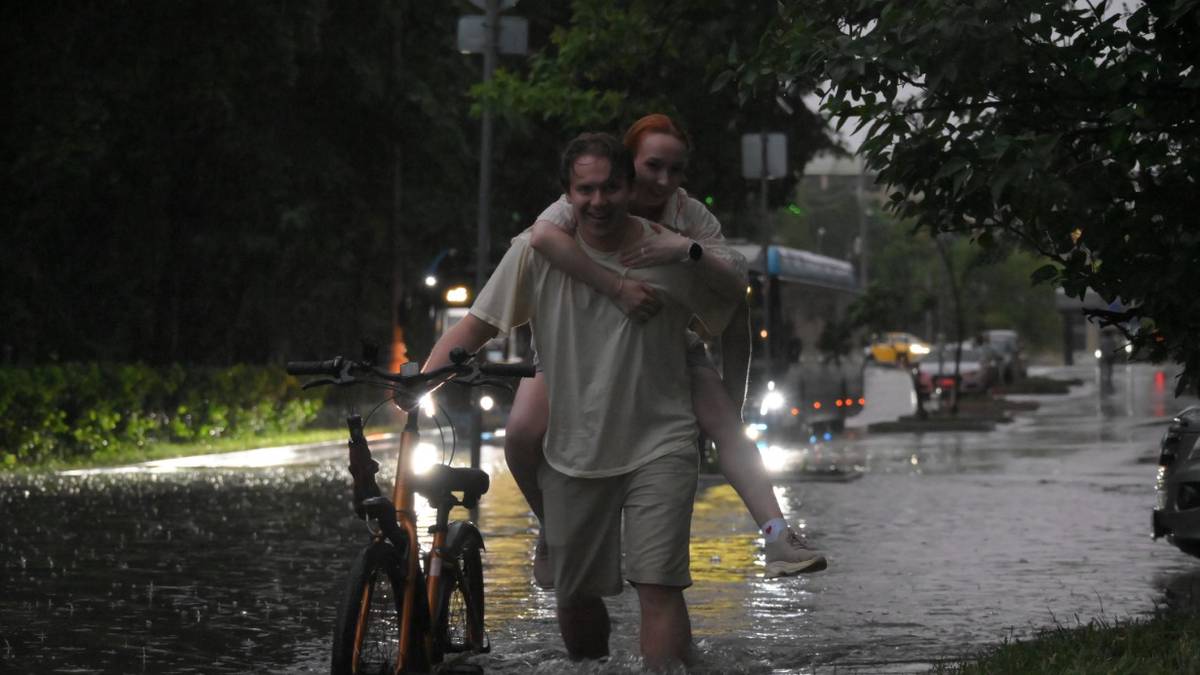
The head of the capital’s Department of Natural Resources and Environmental Protection, Yulia Orozhaeva, said that climate forecasts made several years ago have already been exceeded today. “Moscow Evening” find out the details.
Orozayeva stressed that environmental scientists must respond to such complex climate challenges.
“We are recording heavy tropical rainfall and an increase in wind loads, which affects the entire urban economy,” the director noted.
Tatiana Lidasheva, associate professor at the Department of Environmental Safety and Product Quality Management at the Institute of Environment at the Patrice Lumumba University of People’s Friendship, explained that stormy tropical rains in Moscow appeared due to climate change and the arrival of a North Atlantic hurricane.
“It is he who brought masses of rain clouds and significantly lowered the temperature below the climatological average,” she explained.
The expert stressed that such heavy rains can naturally reduce the level of allergens in the air, as well as cause strong growth of plants.
“From an ecosystem perspective, such tropical rains help recharge rivers and surface aquifers,” she said.
At the same time, increased wind load (which is likely to become constant in the future) can negatively affect agricultural land: sharp gusts of wind can destroy the fertile layer of soil, which can lead to a decrease in yields.
“To avoid this, it is necessary to increase the amount of plants in places not protected from the wind,” added Tatiana Lidasheva.
Many experts argue that in 50 years or by the end of this century, the climate in Moscow at the current rate of warming may approach that of the tropics. Some even say that in the next decade, during the warm season, the average daily temperature will reach 40 degrees.
In any case, we have to be prepared for weather surprises.
Beware of the cold, Muscovites
New research by Chinese and American scientists suggests that hailstones are becoming a rarer, but more deadly, natural phenomenon over time: There is a high probability that hailstones will increase dramatically in size in just a few decades.
This is due to the fact that humid air and strong updrafts freeze large pieces of ice that reach the ground (smaller precipitation melts in the warm atmosphere). These same pieces fall very quickly, and are even able to penetrate surfaces.
Experts were able to draw such conclusions thanks to the analysis of more than 14 thousand historical cases of hail across the planet. Russia is also among the countries where cold poses a danger.
Experts also point out that the karakurt spider, a member of the black widow family, may have taken root in the Moscow region. This theory is linked to climate change and global warming. There is a high risk that new insects, including short-winged bolivaria and salibuja, will replace existing insects. Whether the Moscow region is really threatened by the invasion of dangerous spiders and other insects unusual for our climate, “Moscow Evening” investigated this matter.