

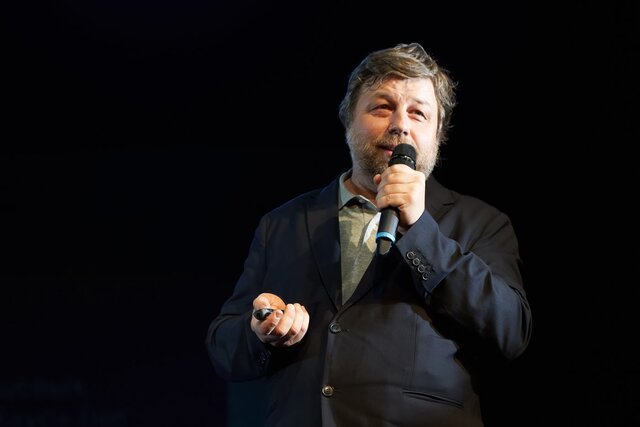
This is an interview with archaeologist Alexander Potyagin for the BBC Russian Service. Journalists’ questions were conveyed to him by his lawyer.
At the beginning of December 2025, Alexander Potyagin was arrested in Warsaw at the request of Ukraine, where he had been wanted since 2024. The Russian scientist was lecturing in Europe and was in Poland while passing through the Netherlands. Since then he has been detained in a pre-trial detention center in Warsaw. Ukraine demands his extradition. Since 1999, Potyagin has led the work of the Myrmeky Archaeological Expedition, which explores the ancient settlement of Myrmeky on the territory of modern Kerch. Ukrainian authorities describe Potyagin’s participation in excavations after 2014, that is, since Russia’s annexation of the Crimean Peninsula, as illegal. The archaeologist is suspected of partially destroying a cultural heritage site and causing damage amounting to more than 201.6 million hryvnia ($4.8 million). The scientist could face up to five years in prison in Ukraine.
The Hermitage administration requested permission to work in the Crimea. After 2014, the museum administration was unable and did not want to send a request to Kiev, as this became impossible. I could not influence this situation.
I continued the work because I considered it necessary and correct in relation to the monument, the ancient settlement of Mermeke. The archaeological site is not to blame because it “found itself in the disputed area.” Political changes should not interfere with scientists. Scientific work is carried out “not in the interest of a particular country or political group, but in the interest of universal science.” Without scientists’ supervision, the monument will begin to collapse. I am a scientist and do not engage in any aggressive activities. The Ukrainian press accuses me and other archaeologists of exporting cultural property from Crimea, but it all remains there, in the museum in Kerch – on the territory that Ukraine considers its own.
I lectured in the European Union because I believed that the traditions of freedom, reason and humanism would not allow Europe to join the “hunt of scholars”. I am paying the price for my faith in Europe.
The persecution of Russian archaeologists is the work of an initiative group of the Kyiv Institute of Archaeology. I understand their anger at Russia, but I’m saddened that my colleagues did this. It is very difficult for me without contact with my loved ones, and it is difficult without scientific work. It seems to me that in my solitude I feel the plant become dull. Discussing art, politics, and science with her fellow prisoners helps a little. Now that I have a lot of time to think, I realize that many things in life need to change. But first I have to get back to my family.
Cover image: Mihail Siergiejevicz / SOPA Images / LightRocket / Getty Images