

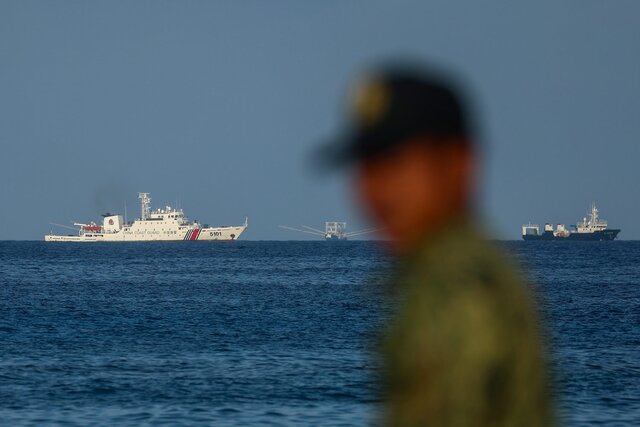
It is an area located outside the territorial sea and adjacent to it and subject to a special legal regime.
The territorial sea is a strip of sea adjacent to the coast that is subject to the sovereignty of the coastal state or its internal waters, and forms part of the state’s territory. The territorial sea is subject to the sovereignty of the coastal state. International law does not allow the expansion of territorial waters beyond 12 nautical miles (22.2 km). Ships of all States have the right of peaceful passage through territorial waters, subject to the provisions of UNCLOS (passage must not violate the security of the coastal State, etc.).
The width of the EEZ may not exceed 200 nautical miles (370.4 km) measured from baselines. In its exclusive economic zone, the State has the exclusive right to:
- To explore, develop and conserve natural resources, living and non-living, in the waters covering the seabed, on the seabed and in its subsoil;
- Jurisdiction over the construction and use of artificial islands, installations and structures;
- Marine scientific research in the field of protecting and preserving the marine environment.
In the exclusive economic zone, all states enjoy freedom of navigation, flight, laying of submarine cables and pipelines, and other uses of the sea that they consider lawful under international law.